Itinerary for Kathmandu to Pokhara, Ghandruk and Mardi Himal
Overview:
This is a fantastic combination of destinations! You'll get to experience the vibrancy of Pokhara, the cultural charm of Ghandruk, and the stunning mountain vistas of the relatively new and popular Mardi Himal trek.
Permits for Mardi Himal Trek:
You will need two permits for the Mardi Himal Trek which will be taken care by us:
Annapurna Conservation Area Project (ACAP) Permit:
Cost: NPR 3,000 (approx. USD 25) for non-SAARC nationals; NPR 1,000 (approx. USD 8) for SAARC nationals. NPR 100 for Nepalese citizen.
Where to get it: Nepal Tourism Board offices in Kathmandu (Bhrikuti Mandap) or Pokhara. You'll need your passport and 2 passport-sized photos.
Trekkers' Information Management System (TIMS) Card:
Cost: NPR 2,000 (approx. USD 15) for individual trekkers (FITs); NPR 1,000 (approx. USD 8) for trekkers through an agency. Nepalese citizens not required to pay.
Where to get it: Nepal Tourism Board offices in Kathmandu or Pokhara, or through a registered trekking agency. You'll need your passport copy and 2 passport-sized photos.
Itinerary: Kathmandu, Pokhara, Ghandruk, Mardi Himal (10-12 Days)
This itinerary combines driving, a cultural village stay, and a trek. It's designed to be comfortable and safe.
Day 1: Drive/Fly Kathmandu to Pokhara (822m)
Option 1 (Drive - Recommended for Monsoon Reliability): Take a tourist bus or private car/jeep from Kathmandu to Pokhara (approx. 6-8 hours). The drive is scenic but can be affected by monsoon rains/landslides.
Option 2 (Flight - Faster but Monsoon Risk): Take a scenic domestic flight from Kathmandu to Pokhara (approx. 25-30 minutes).
Upon arrival in Pokhara, transfer to your hotel.
Evening: Enjoy a leisurely stroll along Lakeside, Pokhara.
Overnight in Pokhara.
Day 2: Pokhara to Ghandruk (1,940m)
Morning: After breakfast, drive from Pokhara to Nayapul (approx. 1.5-2 hours).
From Nayapul, you'll start your trek towards Ghandruk. The trail is mostly uphill, involving many stone steps.
Alternatively, you can take a local jeep directly to Ghandruk (approx. 3-4 hours bumpy ride from Pokhara, depending on road conditions). This saves trekking time and is a good option if you want to conserve energy for Mardi Himal.
Afternoon: Arrive at Ghandruk, a beautiful traditional Gurung village. Check into your guesthouse.
Explore the village, visit the Gurung Museum, and enjoy the stunning views (weather permitting).
Overnight in Ghandruk.
Day 3: Ghandruk to Forest Camp (2,550m)
This day marks the beginning of your Mardi Himal trek section.
From Ghandruk, the trail to Mardi Himal branches off from the main Annapurna Base Camp route.
You'll trek through lush rhododendron and oak forests, ascending gradually. The trail can be muddy.
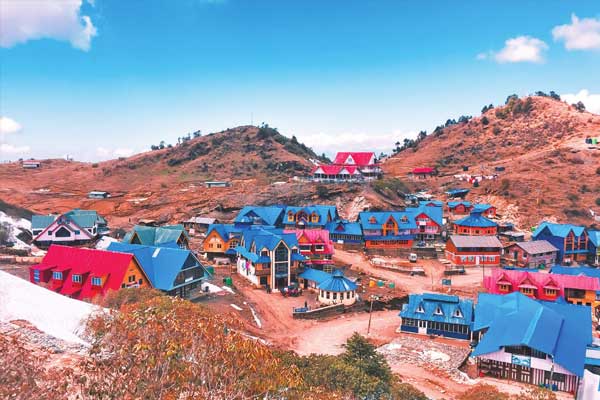
Reach Forest Camp, a small settlement with a few teahouses.
Trekking Time: Approx. 5-6 hours.
Overnight at a teahouse in Forest Camp.
Day 4: Forest Camp to High Camp (3,580m)
The trail continues to ascend through dense forest. As you gain altitude, the trees become shorter and more sparse, offering glimpses of the surrounding peaks.
You'll pass through Low Camp (2,900m) and Badal Danda (Cloud Ridge).
The views of Mardi Himal and Machhapuchhre (Fishtail) become more prominent as you climb higher.
Reach High Camp, the last overnight stop before Base Camp.
Trekking Time: Approx. 5-7 hours.
Overnight at a teahouse in High Camp.
Day 5: High Camp to Mardi Himal Base Camp (4,500m) & Return to Low Camp (2,900m)
Early Morning (Pre-dawn): Start your hike towards Mardi Himal Base Camp. This is the most challenging but rewarding part of the trek.
The trail is narrow and rocky in places, following a ridge with steep drops on either side.
Reach Mardi Himal Base Camp, offering breathtaking panoramic views of Mardi Himal, Machhapuchhre, Annapurna South, Hiunchuli, and other peaks. Take your time to soak in the majestic scenery.
After spending time at Base Camp, descend back to High Camp.
Continue descending further to Low Camp for overnight. This makes the next day's descent shorter.
Trekking Time: Approx. 6-8 hours (4-5 hours to Base Camp and back to High Camp, then 2-3 hours to Low Camp).
Overnight at a teahouse in Low Camp.
Day 6: Low Camp to Siding (1,700m) & Drive to Pokhara
From Low Camp, you'll descend through the forest to Siding village. This descent can be steep and slippery, especially during monsoon.
Trekking Time: Approx. 4-5 hours.
From Siding, a jeep will be waiting to drive you back to Pokhara (approx. 2-3 hours drive, depending on road conditions).
Upon arrival in Pokhara, check into your hotel.
Enjoy a well-deserved rest and celebrate the completion of your trek.
Overnight in Pokhara.
Day 7: Pokhara Exploration & Relaxation
Day 8: Drive/Fly Pokhara to Kathmandu
Option 1 (Drive - Recommended for Monsoon Reliability): Take a tourist bus or private vehicle back to Kathmandu (approx. 6-8 hours).
Option 2 (Flight - Faster but Monsoon Risk): Take a flight back to Kathmandu (approx. 25-30 minutes).
Important Notes for Monsoon Trekking:
Guide and Porter: Highly recommended, especially during monsoon. A guide knows the trails, can navigate tricky sections, and handles logistics. A porter lightens your load.
Gear:
Waterproofs: High-quality rain jacket and trousers are a must.
Footwear: Waterproof trekking boots with good grip and ankle support. Consider gaiters to keep mud and leeches out.
Layered Clothing: For varying temperatures and rain.
Backpack Cover: To protect your belongings.
Insect Repellent: Crucial for leeches and mosquitoes.
Trekking Poles: Very helpful for balance on slippery trails.
Flexibility: Be prepared for changes to the itinerary due to weather, landslides, or road conditions.
Altitude: Mardi Himal Base Camp is at 4,500m. Acclimatization is important. Go slowly, stay hydrated, and be aware of AMS symptoms.
Teahouse Facilities: Basic but comfortable. Expect shared bathrooms, simple meals (Dal Bhat is always a good option!).
Food & Water: Carry water purification tablets/filter. Bottled water is available but generates plastic waste.
First Aid: Carry a basic first aid kit.
Enjoy your incredible adventure in the Annapurna region!
Back to Domestic Packages